


Why do I wake up with a headache? The link between teeth grinding and jaw tension
Waking up with a headache can sometimes be linked to teeth grinding, jaw clenching or tension in the muscles around the face and temples. When these muscles remain active during sleep, they can feel tired, tight or tender by morning.
However, not every morning headache is caused by the jaw. Sleep apnoea, migraine, dehydration, medication use and other health conditions can produce similar symptoms. A thorough assessment is therefore important before deciding that the masseter—or any single muscle—is responsible.
What to know about morning headaches and jaw tension
- Teeth grinding and clenching are collectively known as bruxism.
- Bruxism may occur while awake or during sleep.
- Common signs include morning jaw stiffness, temple pain, sensitive teeth and tooth wear.
- The masseter is important, but it is not the only muscle involved in jaw movement.
- Stress can increase clenching, although it is not the only possible cause.
- A dental splint may protect the teeth but does not necessarily stop the underlying grinding activity.
- Migraine is a neurological condition and should not automatically be attributed to jaw tension.
- Persistent, severe or changing headaches require appropriate medical assessment.
How can teeth grinding cause a morning headache?
The muscles that close the jaw are capable of generating considerable force. During normal eating and speaking, they contract and then relax. With bruxism, repeated grinding or sustained clenching can keep these muscles working for longer than intended.
This may contribute to muscle fatigue, tenderness and referred pain. Referred pain is discomfort felt somewhere other than its original source. For example, tension in a chewing muscle may be experienced as an ache in the temples, around the ear or across the side of the head.
A bruxism-related headache is often described as dull, tight or pressure-like rather than sudden or pulsating. It may be accompanied by a stiff jaw, facial soreness or tooth sensitivity on waking. These features can provide useful clues, but they do not confirm the cause on their own.
What is bruxism?
Bruxism is the repeated grinding, clenching or bracing of the jaw. It can occur in two main forms.
Awake bruxism
Awake bruxism commonly involves clenching the teeth or holding the jaw rigid while concentrating, driving, working or responding to stress. Many people are unaware that they are doing it until they notice tension in the face or jaw.
Sleep bruxism
Sleep bruxism occurs during sleep and may involve rhythmic grinding or short periods of forceful jaw contraction. A partner may hear grinding noises, although silent clenching can also occur.
Stress and anxiety may increase the likelihood of bruxism. Other potential contributors include smoking, alcohol, caffeine, some medicines, sleep disruption and obstructive sleep apnoea. This is why treatment should extend beyond simply identifying a strong jaw muscle.
Five areas a comprehensive assessment may consider
Morning headache and jaw tension can involve several overlapping structures and contributing factors. A comprehensive assessment may consider the following five areas.
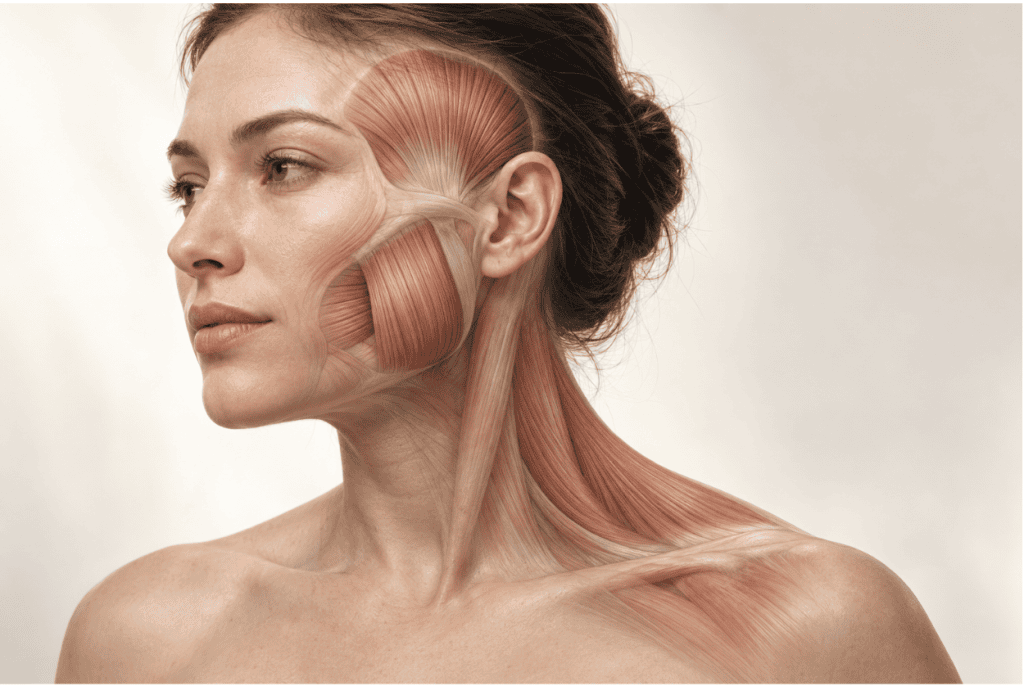
1. The masseter muscles
The masseters sit at the sides of the jaw and play a major role in closing the mouth and chewing. Frequent clenching can make them feel firm, tired or tender. Some people naturally have prominent masseters, while others develop greater muscle bulk through repeated use.
A strong or enlarged masseter does not prove that it is causing the headache. Muscle size, tenderness, jaw function, grinding history and other symptoms need to be considered together.
2. The temporalis muscles
The temporalis is a broad, fan-shaped muscle extending across each temple. It helps close and retract the jaw.
Because of its position, tension in the temporalis may be experienced as temple pressure or a headache at the sides of the head. If treatment focuses only on the masseter, symptoms associated with the temporalis may remain.
This does not mean both muscles should automatically be treated. It means the location and function of each muscle should be examined before a management plan is recommended.
3. The teeth and jaw joints
Bruxism can contribute to flattened or chipped teeth, enamel wear, sensitivity and damage to dental restorations. It may also coexist with temporomandibular disorder, commonly shortened to TMD.
The temporomandibular joints connect the lower jaw to the skull. Joint pain, clicking, locking or restricted opening may indicate that the problem is not purely muscular. A dental assessment can help identify tooth wear, bite concerns and signs of joint dysfunction.
4. The neck and trapezius muscles
Jaw tension can coexist with stiffness in the neck, upper shoulders and trapezius muscles. Stress, posture, prolonged screen use and disrupted sleep may affect several of these areas at once.
Trapezius discomfort does not necessarily mean the muscle is causing a morning headache or should be injected. Neck and shoulder symptoms may require assessment by a doctor or physiotherapist, particularly when movement restrictions, injury or neurological symptoms are present.
5. Sleep, stress and general health
A proper assessment also looks beyond the muscles. Questions about snoring, breathing interruptions, sleep quality, caffeine, alcohol, medication and stress can help identify factors that may be contributing to the symptoms.
Morning headaches can occur in people with obstructive sleep apnoea. Someone who regularly snores, wakes gasping, feels excessively tired during the day or has been observed to stop breathing during sleep should discuss these symptoms with a doctor.
Signs that your headache may be linked to grinding
Jaw tension may be contributing to a morning headache when several of the following occur together:
- jaw stiffness or soreness on waking
- tenderness at the jaw angle or temples
- tooth sensitivity without another clear cause
- visible tooth wear, cracks or chipped dental work
- grinding noises noticed by a partner
- difficulty opening the mouth comfortably in the morning
- an urge to clench during stressful or concentrated tasks
- facial or ear-area discomfort without an ear condition
These symptoms are not exclusive to bruxism. A dentist or doctor may need to rule out dental disease, temporomandibular joint problems, primary headache disorders and sleep-related conditions.
Why treating the masseter alone may not resolve the problem

The masseter is often discussed in relation to jaw clenching because it is large, easy to feel and can become visibly prominent. However, jaw movement depends on several muscles working together.
If temple pain is associated with temporalis activity, focusing only on the masseter may provide incomplete relief. If the headache is primarily caused by migraine, sleep apnoea, a dental problem or medication overuse, reducing masseter activity may not address the underlying condition at all.
Treating additional muscles is not automatically more comprehensive. The goal of assessment is to determine which structures are relevant, which symptoms need referral and whether a proposed treatment is appropriate for the individual.
What about migraine and trapezius tension?
Migraine is more than a severe tension headache. It is a neurological disorder that may cause pulsating head pain, nausea, sensitivity to light or sound, and visual or sensory symptoms.
Jaw clenching can coexist with migraine, and facial tension may aggravate discomfort in some people. However, waking with a headache and a tight jaw does not by itself establish a migraine diagnosis.
Prescription muscle-relaxing injections may be used within established treatment protocols for diagnosed chronic migraine. These protocols can include areas such as the temples, back of the head, neck and trapezius muscles. This is a separate medical treatment pathway from managing bruxism and requires an appropriate headache assessment.
Someone experiencing recurrent migraine symptoms should discuss them with a GP or suitably qualified medical practitioner rather than assuming that jaw treatment alone will provide relief.
How are bruxism and jaw tension managed?
Management depends on the cause, symptoms and degree of dental or muscular involvement. More than one approach may be required.
Protecting the teeth
A dentist may recommend a custom-made occlusal splint or night guard. This can protect the teeth and dental restorations from grinding forces.
A splint does not necessarily stop the brain from initiating sleep bruxism, so ongoing symptoms should still be assessed rather than assuming the underlying problem has been resolved.
Changing daytime clenching habits
People with awake bruxism may benefit from becoming more aware of their resting jaw position. Outside of eating and swallowing, the teeth generally do not need to remain in contact.
Reminders, breathing exercises and stress-management strategies may help reduce habitual clenching. Excessive gum chewing and other activities that repeatedly load the jaw may also need to be limited.
Addressing sleep and lifestyle factors
Reducing late caffeine or alcohol intake, maintaining consistent sleep habits and seeking support for ongoing stress may help some people. Possible sleep apnoea should be medically assessed rather than managed as a jaw problem alone.
Physiotherapy and conservative care
A physiotherapist with experience in jaw and headache conditions may assess jaw movement, posture, neck mobility and muscular tenderness. Treatment may include exercises, manual therapy and strategies to reduce unnecessary muscle loading.
Prescription treatment for selected patients
A medical practitioner may discuss treatment that temporarily reduces activity in selected jaw muscles when clinically appropriate. This is sometimes considered for significant muscle overactivity, pain or masseter prominence.
Evidence suggests that this approach may reduce muscle force or discomfort for some patients, but research remains variable and it may not eliminate the underlying drive to grind. Potential risks, changes to chewing strength, facial balance, treatment limitations and alternative options should be discussed during consultation.
Muscle selection should be based on assessment. A prominent masseter does not automatically justify treatment, and treating the temporalis or trapezius should not be presented as a routine addition for every patient.
Other causes of morning headaches should not be overlooked
Morning headaches can have many potential causes, including:
- obstructive sleep apnoea or disrupted breathing
- migraine or tension-type headache
- dehydration
- caffeine withdrawal
- viral illness or sinus symptoms
- medication side effects or medication overuse
- high blood pressure in some circumstances
- poor sleep quality
- neck-related pain
- dental infection or other oral conditions
Keeping a headache diary may help identify patterns. Record when the headache begins, where it is felt, how long it lasts, associated symptoms and possible triggers.
When should you seek urgent medical care?
Seek urgent medical assessment for a headache that:
- begins suddenly and is extremely severe
- follows a head injury
- occurs with weakness, numbness, confusion or difficulty speaking
- is accompanied by fever and neck stiffness
- causes new vision loss or significant visual disturbance
- is associated with repeated vomiting
- is new, persistent or progressively worsening
- feels substantially different from your usual headaches
Frequent morning headaches also warrant medical review, particularly when they occur with loud snoring, breathing pauses during sleep or severe daytime sleepiness.
Frequently asked questions
How do I know if teeth grinding is causing my morning headache?
Jaw stiffness, temple tenderness, tooth sensitivity and visible tooth wear can suggest that grinding is contributing. However, these signs do not rule out other headache causes. A dental and medical assessment may be needed.
Can a mouthguard stop morning headaches?
A custom dental splint can protect the teeth and may reduce symptoms for some people. It does not always stop sleep bruxism itself, so headaches that continue should be investigated.
Can stress cause jaw clenching?
Stress and anxiety can increase daytime clenching and may contribute to sleep disruption. They are not the only possible causes, so persistent symptoms should not automatically be attributed to stress.
Why do my temples hurt when I wake up?
The temporalis muscles sit across the temples and help close the jaw. Repeated clenching may make them feel tired or tender. Temple pain can also occur with migraine and other headache disorders.
Can strong masseter muscles cause headaches?
Strong or overworked masseters may contribute to jaw fatigue and referred discomfort, but muscle size alone does not establish the cause of a headache. The temporalis muscles, jaw joints, teeth, neck and sleep-related factors may also need assessment.
Should I see a doctor or dentist about morning headaches?
A dentist can assess tooth wear, grinding damage and jaw-joint symptoms. A doctor can investigate migraine, sleep apnoea and other medical causes. Depending on the findings, coordinated care with a physiotherapist or sleep specialist may also be appropriate.
A more complete view of morning headaches
Waking with a headache can be frustrating, particularly when it is accompanied by jaw tightness or facial tenderness. Teeth grinding may be part of the explanation, but identifying one strong muscle does not provide a complete diagnosis.
A careful assessment considers the masseter and temporalis muscles, teeth, jaw joints, neck, sleep quality, stress and headache pattern. This helps determine whether conservative care, dental management, medical treatment or referral is the most appropriate next step.
At MAEC in Bulleen, consultations take a doctor-led, whole-face and whole-patient approach. If you are concerned about jaw tension, strong masseter muscles or recurring morning discomfort, a personalised assessment can help clarify which options may be suitable and whether input from your dentist, GP, physiotherapist or sleep specialist is recommended.
References
- Healthdirect Australia – Teeth grinding
- Australian Dental Association – Teeth grinding
- Better Health Channel – Headache
- Sleep Health Foundation – Teeth grinding/bruxism
- Japanese Dental Science Review – Managements of sleep bruxism in adults: A systematic review
- Toxins – Botulinum toxin for bruxism: An overview
Leave a Reply