

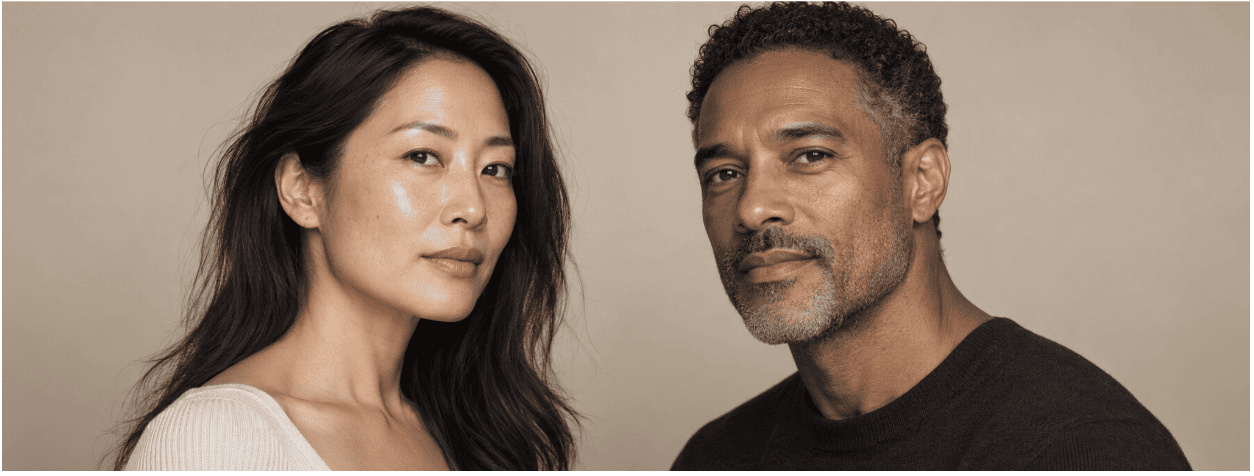
Facial balancing explained: How proportion, light and shadow shape the face
Facial balancing is the process of assessing how different features relate to one another rather than focusing on a single line, wrinkle or area. It considers facial proportions, projection, symmetry, skin quality and the way light and shadow move across the face.
The goal is not to make every face follow the same formula. A balanced approach respects the person’s natural anatomy, ethnicity, expressions and individual features while identifying whether one area is visually influencing the face as a whole.
What does facial balancing mean?
Facial balancing looks at the relationships between different areas of the face.
This may include:
- the forehead, cheeks and lower face
- the eyes and surrounding structures
- the nose, lips and chin in profile
- the temples and outer facial frame
- cheek projection and under-eye transitions
- the jawline and lower-face width
- skin texture, tone and reflectivity
- facial movement and resting expression
An assessment may identify one feature that appears relatively prominent because a neighbouring area has less projection or support. For example, the nose may appear more dominant when the chin has limited projection, even when the nose itself has not changed.
Facial balancing therefore does not necessarily mean treating multiple areas. It means understanding the complete visual relationship before deciding whether any treatment is appropriate.
Facial proportion is about relationships, not perfect measurements
Traditional facial analysis sometimes divides the face into horizontal thirds or vertical fifths. These measurements can help practitioners observe relative facial height, width and spacing.
However, they should be used as guides rather than rigid rules.
Faces naturally differ according to:
- genetics
- age
- sex
- ethnicity
- skeletal structure
- soft-tissue distribution
- individual development
Research has identified meaningful variation in facial dimensions across different populations. A feature considered balanced on one face may not have the same relationship or cultural meaning on another.
Is the golden ratio the ideal facial proportion?
The golden ratio is often promoted as a mathematical formula for beauty. However, natural faces do not consistently follow one universal ratio.
A systematic review examining the golden proportion in natural facial aesthetics found that measured facial relationships frequently differed from the proposed formula.
Facial balance is more complex than applying one number. Expression, skin quality, cultural background and the relationship between individual features all influence how a face is perceived.
The aim of consultation should not be to calculate how a person’s face differs from a theoretical ideal. It should be to understand what looks harmonious for that particular person.
Natural facial asymmetry is normal
No face is completely symmetrical. One eyebrow may sit slightly higher, one cheek may project differently or one side of the jaw may be stronger.
Differences may come from:
- natural skeletal development
- dental structure
- habitual facial expressions
- sleeping position
- previous injury
- muscle strength
- differences in soft-tissue volume
- normal ageing
Small asymmetries contribute to identity and expression. Attempting to remove every difference can lead to unnecessary treatment or a face that appears less natural.
A whole-face assessment considers whether an asymmetry is noticeable, whether it concerns the patient and whether treatment would provide a meaningful benefit. In some cases, no treatment may be the most appropriate recommendation.
New or rapidly developing facial asymmetry—particularly when accompanied by weakness, numbness or difficulty speaking—requires medical assessment rather than cosmetic treatment.
How light and shadow change the perception of a face
The face is three-dimensional. Its appearance changes depending on how light reaches areas of projection and how shadows form around hollows, folds and transitions.
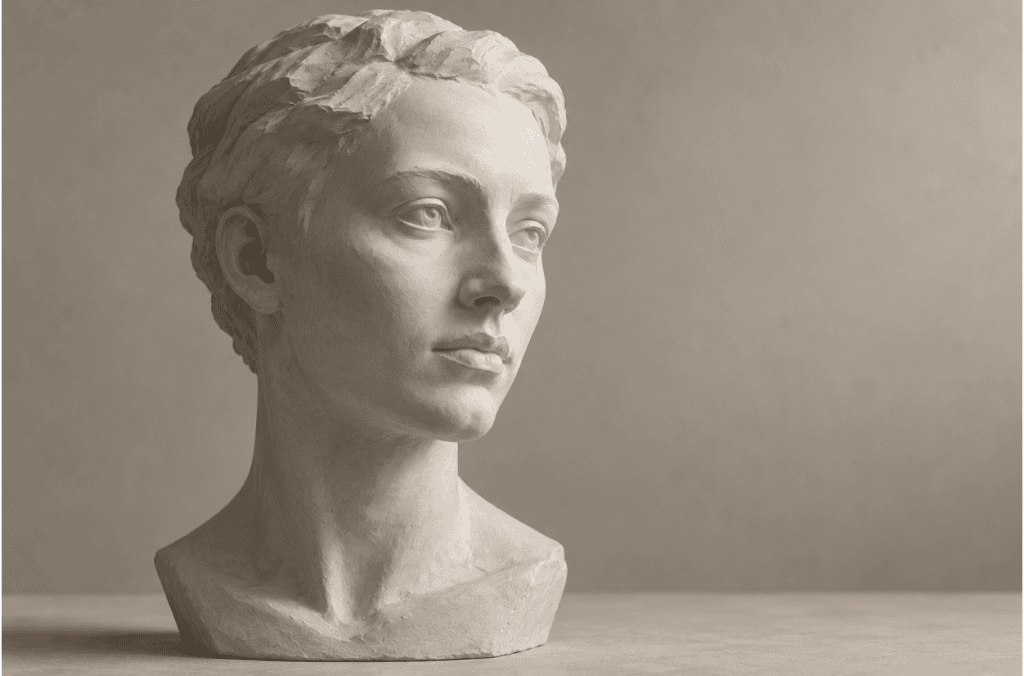
Areas that commonly catch light include:
- the forehead
- the upper cheeks
- the bridge of the nose
- the centre of the chin
Areas where shadows commonly form include:
- the temples
- beneath the eyes
- below the cheekbones
- beside the nose
- beneath the lower lip
- along parts of the jawline
A shadow is not necessarily a skin problem. It may be created by the relationship between facial structures.
For example, a tear trough may appear dark because the hollow sits next to the projection of the cheek. Changes in lighting can make the same under-eye area look more or less noticeable.
Skin quality also affects light reflection
Light does not interact only with facial shape. It also reflects from the skin’s surface.
Smooth, hydrated and relatively even skin tends to diffuse light differently from skin affected by dryness, roughness, uneven pigmentation or fine lines. Research suggests that facial radiance and the location of reflected light can influence perceptions including health, tiredness and overall appearance.
This is why improving skin quality may help a face appear fresher without changing facial volume or proportions.
How the layers of the face influence balance
Facial balance is created by several anatomical layers working together.
Bone
The facial skeleton provides the underlying framework. The shape and projection of the cheekbones, jaw, chin, nose and eye sockets influence the proportions visible at the surface.
Skeletal structure also changes gradually with age. These changes can affect the support available to overlying tissue.
Fat compartments
Facial fat is organised into separate compartments rather than one continuous layer. Some compartments provide projection, while others help create smooth transitions between features.
These areas can change at different rates. A reduction in deeper cheek support may make the under-eye transition appear more visible, while changes in the lower face can affect jawline definition.
Retaining structures
Facial retaining structures connect the skin and soft tissue to deeper anatomical layers. They also help define the boundaries between facial compartments.
Changes in the tissues around these attachment points can contribute to folds and shadows. However, it is not accurate to assume that an injectable treatment simply “tightens the ligaments”. The anatomy and biological response are more complex.
Muscles
Facial muscles create movement and expression. Repeated activity can contribute to lines and may affect the position of features such as the eyebrows or corners of the mouth.
Reducing activity in one muscle can also change the balance between neighbouring muscles, which is why treating an isolated line without assessing facial movement may not improve the face overall.
Skin
The skin forms the visible surface. Collagen, elasticity, pigmentation, hydration and texture all influence how the underlying structures are perceived.
Facial ageing occurs across the skin, fat, muscles, retaining structures and bone, but the timing and degree of change differ between people.
How one feature can change the perception of another
The face is viewed as a connected composition. A relatively small change in one area can influence how another feature appears.
Nose and chin
The relationship between the nose, lips and chin is particularly noticeable in profile. A chin with limited projection may make the nose appear more prominent, even when the nose is proportionate when viewed alone.
Under-eyes and cheeks
Under-eye shadows may become more visible when cheek projection or deep midface support changes. This is why treating directly beneath the eyes is not always the first or most appropriate option.
Temples and cheeks
Hollowing at the temples can alter the outer frame of the face. This may make the cheekbones appear sharper or change the transition between the forehead and midface.
Lips and lower face
Lip shape should be assessed in relation to the chin, nose, teeth and overall lower-face proportions. Focusing only on lip size can create imbalance with surrounding features.
Jawline and chin
Jawline definition depends on more than the jaw itself. Chin shape, muscle activity, skin quality and the distribution of tissue beneath the face can all affect the lower-face outline.
These relationships help explain why copying another person’s treatment plan rarely produces the same result.
What happens during a facial balancing assessment?
A facial balancing consultation should begin with discussion rather than treatment.

The practitioner may ask about:
- the specific concern
- when it first became noticeable
- previous cosmetic procedures
- relevant medical conditions and medicines
- dental or jaw concerns
- skin history
- expectations and preferred degree of change
- whether the concern appears at rest, during expression or in photographs
The face may then be assessed from several views.
Front view
The front view helps assess width, symmetry, facial thirds, skin tone and the relationship between central and outer features.
Three-quarter view
The three-quarter view often reveals cheek projection, under-eye transitions, temple contours and the way light moves across the midface.
Profile view
The profile helps assess the relationship between the forehead, nose, lips and chin.
During movement
Smiling, frowning, speaking and raising the eyebrows can show how muscle activity influences facial balance. A face that appears balanced at rest may behave differently during expression.
Current facial-assessment frameworks increasingly include skin quality, shape, proportion, symmetry and expression while recognising the need for culturally sensitive and patient-centred evaluation.
Does facial balancing always involve adding volume?
No. Facial balancing is an assessment concept, not a specific procedure.
Depending on the cause of the concern, a plan may focus on:
- improving skin texture or pigmentation
- supporting skin hydration and barrier function
- addressing selected patterns of muscle activity
- restoring proportion or projection in carefully selected areas
- supporting gradual improvements in tissue quality
- monitoring the area without treatment
- referral for dental, surgical or other medical assessment
Adding volume everywhere does not create balance. Inappropriate or excessive volume can alter expression, create heaviness or make one area appear disconnected from the rest of the face.
The most suitable plan may involve one conservative treatment, several staged treatments or no procedure.
Where might structural support treatments fit?
When a change in projection or soft-tissue support is contributing to shadowing or imbalance, a medical practitioner may discuss a treatment intended to provide structural support.
The aim should not be to enlarge every feature or fill every hollow. Treatment planning may instead consider whether a carefully selected area influences the appearance of neighbouring features.
For example, improving the transition through the midface may affect the perception of the under-eye area without treating the deepest point directly.
All cosmetic injection procedures carry risks. These can include temporary effects such as swelling and bruising as well as uncommon but serious complications. The TGA advises patients to consider practitioner qualifications, product regulation, risks and aftercare before proceeding.
Where might collagen-stimulating treatments fit?
Collagen-stimulating treatments, sometimes called biostimulators, work differently from treatments primarily intended to create immediate projection.
They may be considered in selected patients when changes in tissue quality, firmness or broader facial support are part of the concern. Their effects typically develop gradually and depend on the individual biological response.
They are not suitable for every area or every patient. They also should not be described as directly rebuilding facial ligaments or guaranteeing tighter skin.
A systematic review found growing interest in biostimulatory approaches for facial rejuvenation while also noting variation across the available products, techniques and evidence.
Why skin quality remains part of facial balancing
Proportion alone does not determine how a face is perceived.
Uneven pigmentation, redness, rough texture or sun-related damage can draw attention away from facial contours. Conversely, more even skin may reflect light across the face more consistently.
In some patients, addressing the skin may provide a more relevant improvement than changing facial shape. In others, skin quality and structural changes may both contribute.
This is why skin and structure should be assessed separately before deciding whether they need separate approaches.
Why more treatment does not mean better balance
Facial balancing can be misunderstood as a checklist of areas to treat. In reality, treating too many areas may reduce the natural differences that make a face recognisable.
A conservative plan should consider:
- which concern matters most to the patient
- which feature has the greatest visual influence
- whether the proposed change suits the rest of the face
- whether the benefit justifies the risk
- whether treatment can be staged
- whether the result is likely to remain natural during movement
- whether no treatment is a reasonable option
Balance is not created by making every feature larger, smoother or more symmetrical. It comes from understanding which relationships are already harmonious and which, if any, may benefit from careful adjustment.
Frequently asked questions
Is facial balancing the same as facial filler?
No. Facial balancing is an assessment of the whole face. A treatment intended to provide structural support may be one possible option, but skincare, skin procedures, muscle-focused treatment or no treatment may be more appropriate.
Does facial balancing use the golden ratio?
Measurements can provide useful reference points, but the golden ratio is not a universal formula for attractiveness. Natural proportions vary between individuals and populations.
Can facial balancing make my face completely symmetrical?
No treatment can make a living, expressive face perfectly symmetrical. Small differences are normal and contribute to facial identity. The aim should not be mathematical perfection.
How do light and shadow affect facial appearance?
Projected areas catch light, while hollows and folds create shadows. Skin texture and pigmentation also influence how light reflects, so both facial structure and skin quality affect the overall appearance.
Will facial balancing make me look like a different person?
A conservative plan should preserve recognisable features and normal expression. The proposed degree of change, limitations and risks should be discussed before treatment.
Can facial balancing be completed in one appointment?
Assessment can occur in one consultation, but treatment does not always need to happen immediately. Some plans are better staged so that the response can be reviewed before another area is considered.
A whole-face approach to proportion
Facial balancing is not about creating a standard face. It is about understanding how individual features, skin quality, facial movement, projection, light and shadow work together.
Treating the most noticeable line or hollow may not address the reason it stands out. A whole-face assessment can determine whether the concern comes from the skin, muscles, structural relationships or a combination of factors.
MAEC provides doctor-led consultations in Bulleen for patients across Melbourne and the eastern suburbs. A personalised assessment can help clarify which areas are influencing facial balance, whether treatment is appropriate and which options, limitations and risks should be considered.
References
- The Journal of Prosthetic Dentistry – Assessment of the golden proportion in natural facial aesthetics: A systematic review
- PLOS One – Inter-ethnic and racial facial variations: A systematic review and Bayesian meta-analysis
- Aesthetic Surgery Journal – The facial ageing process from the inside out
- International Journal of Cosmetic Science – Facial radiance influences facial attractiveness and affective impressions of faces
- Australasian Journal of Dermatology – Comparison of self-reported signs of facial ageing among women in Australia, the USA, the UK and Canada
- Journal of Plastic, Reconstructive & Aesthetic Surgery – The emerging role of biostimulators as an adjunct in facial rejuvenation: A systematic review
- Therapeutic Goods Administration – Cosmetic injections: Tips to help you make an informed decision
Leave a Reply