


Melasma Treatment Options in Australia: What You Need to Know
Melasma can often be improved, but there is no single treatment that is suitable for everyone—and permanent clearance cannot be guaranteed.
Effective melasma treatment usually combines daily sun and visible-light protection, carefully selected skincare, management of potential triggers and, where appropriate, professional or medical treatment. The best approach depends on the type and depth of the pigmentation, the person’s skin type, previous treatments, health history and how readily their skin becomes irritated.
For this reason, treating melasma generally begins with an accurate diagnosis rather than immediately choosing a product or procedure.
Can Malasma be treated?
Yes, melasma can often be made less visible. However, it is usually approached as a long-term condition that requires ongoing management.
Some people experience a significant reduction in pigmentation. Others may notice more modest improvement, particularly when pigment is located deeper within the skin or when ongoing hormonal and environmental triggers are present.
Treatment commonly aims to:
- Reduce the appearance of existing pigmentation
- Limit further pigment production
- Avoid unnecessary inflammation
- Identify and manage potential triggers
- Improve the overall health and tolerance of the skin
- Establish a maintenance plan that reduces recurrence
Improvement is usually gradual. Even when the skin becomes clearer, sunlight, visible light, heat, hormonal changes or irritation may cause the pigmentation to become noticeable again.
Why diagnosis should come before treatment
Melasma is one form of hyperpigmentation, but not every brown patch on the face is melasma.
Sunspots, freckles, post-inflammatory pigmentation and certain skin lesions may look similar. More than one type of pigmentation can also be present at the same time.
Before recommending treatment, a qualified practitioner may consider:
- The location and distribution of the pigmentation
- Whether it appears on both sides of the face
- When it first developed
- Pregnancy or other hormonal influences
- Contraceptive or medication use
- Sun, heat and visible-light exposure
- Previous skincare and procedures
- Skin sensitivity and inflammatory conditions
- The person’s natural skin tone
- Whether the pigment appears superficial, deep or mixed
Treating melasma as though it were an isolated sunspot can lead to disappointing results. Some aggressive treatments may cause inflammation and make the pigmentation more noticeable.
For more background, see What Is Melasma? Causes, Signs and Why It Keeps Coming Back and Melasma vs Hyperpigmentation: How Can You Tell the Difference?.
Sun and visible-light protection
Consistent protection from light is one of the foundations of melasma management. Without it, the skin may continue receiving signals to produce pigment even while other treatments are being used.
Daily protection may include:
- Broad-spectrum SPF 50 or SPF 50+ sunscreen
- A water-resistant formula when swimming, exercising or perspiring
- Applying an adequate amount of sunscreen
- Reapplying when required
- Wearing a broad-brimmed hat
- Seeking shade during periods of high ultraviolet exposure
- Using protective clothing and sunglasses
Tinted sunscreens containing iron oxides may provide additional protection from visible light. However, the best sunscreen is also one that suits the individual’s skin and can be applied consistently.
Sunscreen does not remove existing pigment. Its role is to reduce further stimulation and support the effectiveness of the broader treatment plan.
Melasma skincare and topical treatment
Topical skincare is often part of first-line melasma management. Depending on the individual, products may be used to reduce pigment production, encourage controlled skin renewal, provide antioxidant support or strengthen the skin barrier.

Options considered by a practitioner may include ingredients such as:
- Azelaic acid
- Vitamin C
- Retinoid or vitamin A derivatives
- Pigment-regulating ingredients
- Prescription depigmenting medication
Not every active ingredient is appropriate for every person. Some can cause dryness, redness or irritation, particularly when several products are introduced simultaneously.
Inflammation can contribute to additional pigmentation, especially in medium to darker skin tones. A stronger product or higher concentration is therefore not automatically a better choice.
Some prescription treatments are also unsuitable during pregnancy or breastfeeding. These decisions should be discussed with an appropriately qualified medical practitioner rather than based on general online recommendations.
Supporting the skin barrier
Melasma treatment often focuses heavily on active ingredients, but the condition of the skin barrier is equally important.
A supportive routine may include:
- A gentle cleanser
- A moisturiser suited to the skin type
- Daily sunscreen
- Carefully selected active ingredients
- Gradual product introduction
- Temporary reduction of active products if significant irritation develops
Using multiple exfoliating acids, scrubs and retinoid products together may compromise the skin barrier without producing faster or more reliable improvement.
Chemical peels for melasma
Selected chemical peels may be incorporated into a melasma treatment plan. They work by creating controlled exfoliation and may help reduce the appearance of superficial pigmentation.
The type and strength of peel should be chosen according to the person’s skin type, pigment pattern, sensitivity and previous response to treatment.
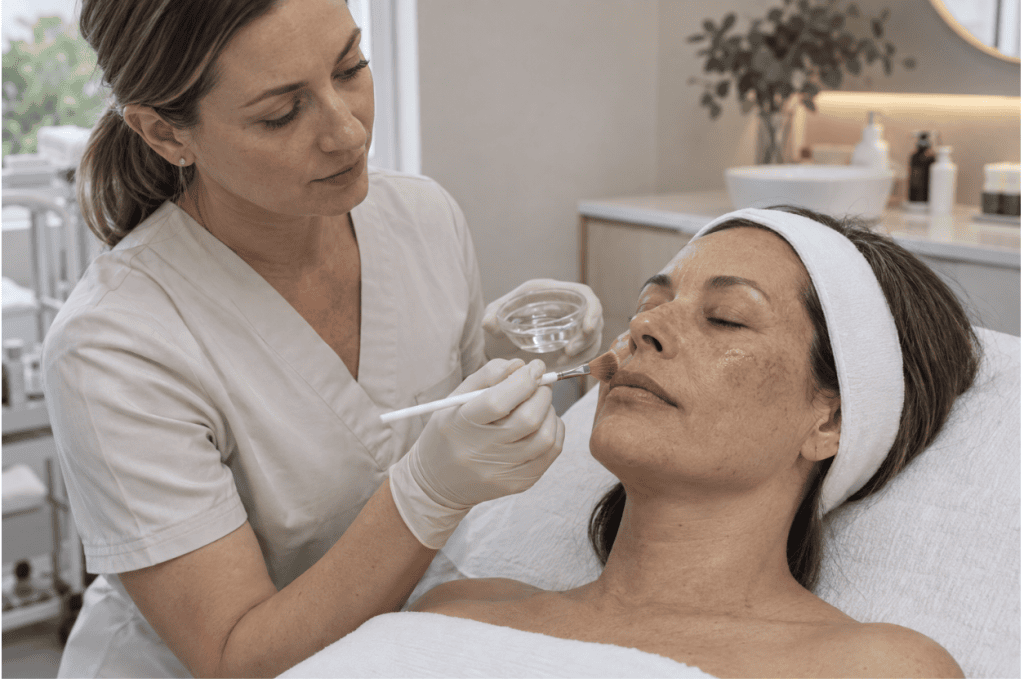
Potential limitations include:
- Redness, dryness and temporary sensitivity
- Post-inflammatory pigmentation
- Uneven results
- Recurrence following renewed light exposure
- Aggravation of melasma if the peel is too strong
Chemical peels are generally considered one component of a broader plan rather than a permanent solution. Careful preparation and aftercare are important, particularly for skin that pigments easily.
Strong home peels or products purchased from unregulated sources may expose the skin to unnecessary risk.
Laser and light-based treatments
Laser and light-based devices are often promoted for facial pigmentation, but melasma requires particular caution.
These devices use targeted energy to affect pigment or create controlled changes within the skin. Although selected patients may experience improvement, the response can be unpredictable. Heat and inflammation may stimulate further pigmentation, and melasma can return after treatment.
Laser or light treatment may be considered when:
- The diagnosis has been carefully assessed
- Foundational skincare and sun protection are established
- More conservative options have not provided sufficient improvement
- The device and settings are appropriate for the person’s skin
- The patient understands the risk of recurrence or worsening
Treatment suitable for an isolated sunspot may not be suitable for broad, hormonally influenced melasma.
Australian dermatology guidance generally reserves laser and light-based treatments for selected treatment-resistant cases because results can vary and pigmentation may worsen.
Oral treatment for Melasma
In selected cases, a doctor may consider oral medication as part of melasma management.
One option sometimes considered is tranexamic acid. Although it may reduce melasma in some patients, it is not suitable for everyone and requires medical assessment. A doctor may need to consider the person’s medical history, medications and risk factors for blood clots before deciding whether it is appropriate.
People should not use prescription medication obtained from friends, overseas websites or other unregulated sources.
Oral treatment does not replace daily sun protection, appropriate topical care or ongoing maintenance.
Cosmetic camouflage
Cosmetic camouflage does not treat the underlying pigmentation, but it can help reduce its visible contrast while other measures take effect.
Tinted sunscreen, colour-correcting products and suitable makeup may provide immediate cosmetic improvement without exposing the skin to an aggressive procedure.
This can be particularly helpful because most melasma treatments require time and consistent use before a visible change is seen.
Comparing melasma treatment options
Option | Potential role | Important limitation |
Sun and visible-light protection | Helps reduce repeated pigment stimulation | Requires consistent daily application and other protective measures |
Topical skincare | May regulate pigment production and support gradual improvement | Can cause irritation if unsuitable or overused |
Prescription topical treatment | May be considered for more targeted pigment management | Requires medical guidance and may not suit pregnancy or breastfeeding |
Chemical peels | May assist with selected superficial pigmentation | Can cause inflammation or post-inflammatory pigmentation |
Laser or light treatment | May be considered in selected resistant cases | Results are variable, and melasma may worsen or recur |
Oral medication | May be considered by a doctor for suitable patients | Requires medical screening and is not appropriate for everyone |
Cosmetic camouflage | Provides immediate visual coverage | Does not alter the underlying condition |
The appropriate plan may combine several options, but it should not necessarily begin with all of them at once.
What does a staged treatment plan involve?

A staged approach allows the skin’s response to be monitored and reduces the likelihood of unnecessary irritation.
Stage 1: Confirm the diagnosis
The pigmentation is assessed to determine whether it is consistent with melasma or another condition. Potential triggers, medical factors and previous treatments are also reviewed.
Stage 2: Establish protection and skin stability
Daily sunscreen, visible-light protection and a tolerable skincare routine are introduced or refined. Existing irritation may need to settle before more active treatment begins.
Stage 3: Introduce targeted treatment
Suitable topical, procedural or medical options can be added gradually. The plan should reflect the individual’s skin rather than follow a standard treatment package.
Stage 4: Review progress
Progress may be assessed using consistent lighting and photography. This is more reliable than comparing the skin under different lighting conditions or relying on day-to-day impressions.
Stage 5: Maintain the improvement
Once pigmentation has improved, treatment may be reduced or adjusted rather than stopped suddenly. Daily protection and selected maintenance products may remain necessary.
What should you avoid when treating melasma?
Common approaches that may cause difficulty include:
- Using strong bleaching or lightening creams without supervision
- Combining several active ingredients immediately
- Applying frequent home peels
- Scrubbing or exfoliating the pigmentation aggressively
- Changing products before they have had time to work
- Assuming laser treatment will permanently remove melasma
- Treating all facial pigmentation in the same way
- Stopping sun protection when the skin improves
Products purchased online may also contain undisclosed or inappropriate ingredients. If a product does not provide clear ingredient information or comes from an unregulated source, it should be approached with caution.
When might treatment need to be modified?
Treatment choices may need to be changed or deferred for people who:
- Are pregnant, trying to conceive or breastfeeding
- Have active dermatitis, infection or significant skin irritation
- Take medication that affects treatment suitability
- Have a history of blood clots or relevant medical risk factors
- Have recently tanned or experienced sunburn
- Cannot avoid significant sun exposure during recovery
- Have pigmentation that is changing, raised, bleeding or otherwise atypical
A suspicious or changing pigmented lesion requires medical assessment and should not be treated as cosmetic melasma.
How long does Melasma treatment take?
Melasma usually improves over months rather than days. The timeframe depends on the depth of the pigment, the treatments used, consistency with sun protection and whether ongoing triggers remain present.
Some people notice early changes within several weeks, while deeper or mixed pigmentation may respond more slowly.
Treatment should be reviewed if the skin becomes persistently red, painful, inflamed or noticeably darker. Continuing an irritating routine in the hope that it will eventually work may make pigmentation more difficult to manage.
Frequently asked questions
What is the best treatment for melasma?
There is no single best treatment for every patient. A combination of light protection, suitable topical care and carefully selected professional or medical treatment is often used. The appropriate combination depends on the person’s skin, health history and pigment pattern.
Can laser remove melasma permanently?
No treatment can guarantee permanent melasma removal. Laser and light-based treatments may help selected patients, but melasma can recur and may sometimes worsen following unsuitable treatment.
Are chemical peels safe for melasma?
Selected superficial peels may be appropriate when performed as part of a considered treatment plan. Strong or poorly selected peels can cause inflammation and additional pigmentation.
Can melasma be treated during pregnancy?
Some supportive measures, particularly sun protection and gentle skincare, remain important during pregnancy. However, several prescription and active treatments are not considered appropriate. Treatment choices should be discussed with a doctor.
Does melasma return after treatment?
Melasma commonly returns because the skin’s underlying tendency to produce pigment remains. Sunlight, visible light, heat and hormonal changes may stimulate the pigmentation again. Maintenance is therefore an important part of treatment.
When should facial pigmentation be medically assessed?
Seek medical assessment if pigmentation is new, changing rapidly, raised, sore, itchy, crusted, bleeding or different from surrounding marks. These features should not automatically be assumed to represent melasma.
A considered approach to Melasma treatment
Melasma treatment is rarely about finding one procedure that removes all visible pigment. It is about understanding the condition, reducing repeated triggers and selecting options that the skin can tolerate over time.
A consultation-led plan can help distinguish melasma from other pigmentation, identify factors that may influence treatment and explain the benefits and limitations of available options.
MAEC provides doctor-led skin consultations in Bulleen, Melbourne, with treatment planning based on the individual’s skin, medical history and concerns. Explore MAEC’s skin rejuvenation and skin health programs or book a consultation with the clinical team.
Leave a Reply