

Melasma vs Hyperpigmentation: How Can You Tell the Difference?
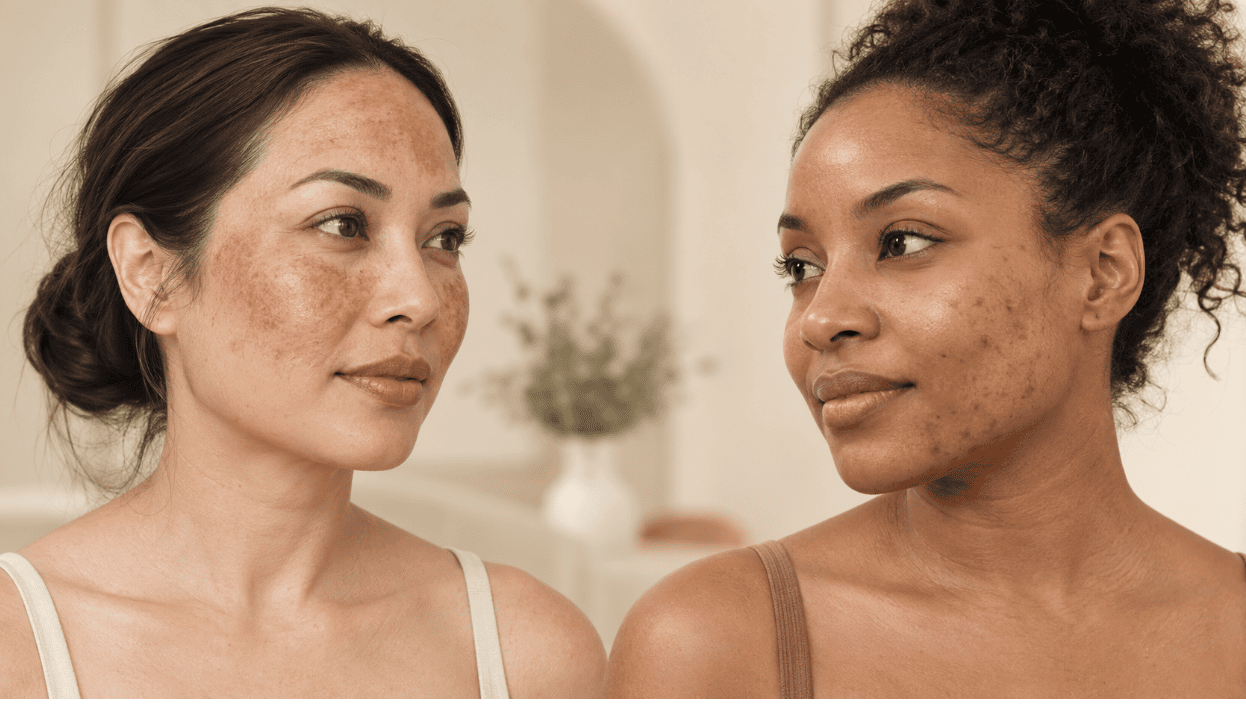
Melasma and hyperpigmentation are related, but they are not the same condition. Hyperpigmentation is a broad term for areas of skin that appear darker than the surrounding skin, while melasma is one specific type of hyperpigmentation.
The location, pattern and history of the pigmentation can provide useful clues. Melasma often forms broader, relatively symmetrical patches across the face. Other forms of hyperpigmentation may appear as individual sunspots or marks left behind after acne, irritation or injury.
However, appearance alone does not always provide a reliable diagnosis. Different pigment concerns can occur together, and the safest treatment approach depends on understanding what has caused the colour change.
What is hyperpigmentation?
Hyperpigmentation describes any area of skin that becomes darker because of increased pigment. It is an umbrella term rather than one specific diagnosis.
Skin colour is partly determined by melanin, a pigment produced by specialised cells called melanocytes. When these cells produce more melanin than usual, or when pigment collects unevenly in the skin, darker patches or spots can develop.
Common types of hyperpigmentation include:
- Melasma
- Post-inflammatory hyperpigmentation
- Sunspots, also called solar lentigines
- Freckles
- Pigmentation associated with certain medicines or health conditions
Although these concerns can appear similar, their triggers and behaviour may be quite different.
For example, a dark mark that develops after an acne lesion is not necessarily managed in the same way as melasma associated with hormonal changes and sun exposure. A defined sunspot may also respond differently from a broad patch of deeper pigmentation.
What is Melasma?
Melasma is a particular pigmentary condition that commonly appears as flat, blotchy areas of light brown, dark brown or grey-brown colour.
It most often affects:
- The cheeks
- The forehead
- The bridge of the nose
- The skin above the upper lip
- The chin or jawline
Melasma often appears on both sides of the face in a similar pattern. It is more common in women and in people whose skin tans easily, although it can affect people of any gender or skin tone.
The cause is complex. Genetics, ultraviolet radiation, visible light and hormonal changes may all contribute. Pregnancy, hormonal contraception and hormone replacement therapy are recognised associations, but not every person with melasma has an identifiable hormonal trigger.
Melasma also has a tendency to recur. Even if the visible pigment improves, sunlight and other ongoing influences may stimulate it again.
For a more detailed explanation, read What Is Melasma? Causes, Signs and Why It Keeps Coming Back.
What is the difference between melasma and hyperpigmentation?
The simplest distinction is that melasma is a form of hyperpigmentation, but not all hyperpigmentation is melasma.
The term hyperpigmentation describes the visible change in skin colour. Melasma describes a particular condition with recognisable patterns and contributing factors.
Feature | Melasma | Other hyperpigmentation |
Meaning | A specific pigmentary condition | A broad category covering several causes of darker skin |
Typical appearance | Flat, blotchy brown or grey-brown patches | May appear as individual spots, scattered marks or irregular patches |
Common location | Cheeks, forehead, nose, upper lip and jawline | Can develop anywhere, depending on the cause |
Pattern | Often affects both sides of the face | May follow acne, inflammation, injury or areas of sun exposure |
Common triggers | Sunlight, visible light, hormones and genetic susceptibility | Sun damage, inflammation, injury, medication or other skin conditions |
Behaviour | Often chronic and prone to recurrence | Depends on the underlying cause |
Treatment approach | Usually requires long-term trigger management | Varies according to the type and depth of pigmentation |
These differences can offer useful clues, but they should not be treated as a diagnostic checklist. Some people have more than one form of pigmentation at the same time.
Melasma vs post-inflammatory hyperpigmentation
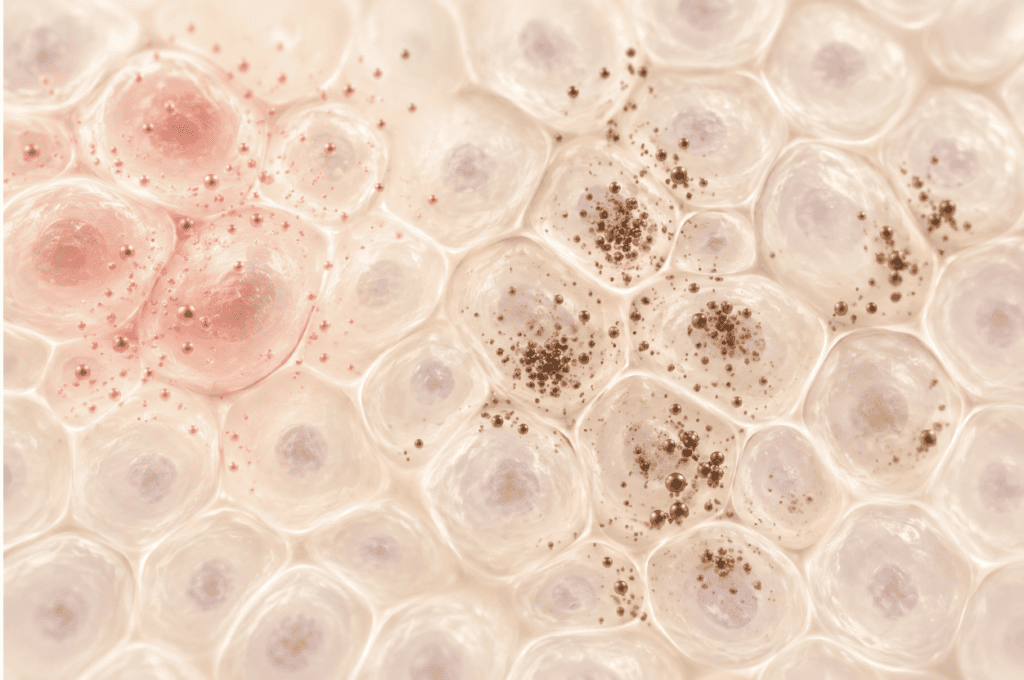
Post-inflammatory hyperpigmentation, often shortened to PIH, develops after the skin has been inflamed or injured.
Common triggers include:
- Acne lesions
- Eczema or dermatitis
- Burns
- Cuts or abrasions
- Insect bites
- Picking or squeezing the skin
- Irritation caused by skincare or cosmetic procedures
Once the original inflammation settles, a flat brown, grey-brown or darker mark may remain in the same location.
This history is one of the main differences between PIH and melasma. Post-inflammatory pigmentation generally follows the shape and location of an earlier skin concern. Melasma more often appears as broader patches in characteristic areas of the face without a preceding pimple or injury.
Both can become more noticeable following sun exposure, and both may affect the epidermis, dermis or a combination of skin layers. This can make them difficult to distinguish without examining the skin and discussing how the pigmentation developed.
Melasma vs Sunspots

Sunspots, or solar lentigines, are well-defined areas of pigmentation associated with cumulative sun exposure.
They commonly appear on:
- The face
- The backs of the hands
- The shoulders
- The chest
- Other frequently exposed areas
Sunspots usually appear as separate, clearly defined marks rather than the broader, more symmetrical patches associated with melasma.
The distinction matters because a device or procedure used for selected sunspots may not be appropriate for melasma. Australian dermatology guidance notes that laser and light-based treatments for melasma can have unpredictable benefits and may sometimes worsen the condition.
A person can also have melasma and sunspots together. Treating every visible mark as though it has the same cause may therefore produce uneven or disappointing results.
Melasma vs Freckles
Freckles are small, flat spots influenced by genetics and sun exposure. They often begin earlier in life and may become darker following sun exposure before fading during periods of lower UV exposure.
Melasma generally forms larger, connected or blotchy patches. It also tends to develop during adulthood and may be associated with pregnancy or other hormonal influences.
Freckles are not necessarily a medical concern. However, any new or changing pigmented spot should be checked rather than assumed to be a freckle or cosmetic pigmentation.
Can you identify melasma by looking in the mirror?
You may be able to recognise features that resemble melasma, but a mirror cannot reveal the full cause or depth of pigmentation.
Questions that may provide useful context include:
- Does the pigmentation affect both sides of the face?
- Is it spread across the cheeks, forehead or upper lip?
- Did it first appear during pregnancy or after a hormonal change?
- Does it become darker during spring or summer?
- Did each mark develop after acne, irritation or injury?
- Are the spots separate and well-defined or broad and patchy?
- Has the pigmentation changed after previous skincare or procedures?
These questions help establish a history, but they do not confirm a diagnosis. Colour can also be misleading. Melasma, post-inflammatory pigmentation and sunspots may all appear brown, while deeper pigment can take on a grey-brown or blue-grey tone.
Why an accurate diagnosis matters
Pigmentation treatment is not simply a matter of making the skin lighter. The cause, depth and behaviour of the pigment all influence which options may be suitable.
For example:
- Treating active acne without controlling inflammation may allow new dark marks to continue developing.
- Aggressive exfoliation may irritate the skin and contribute to further post-inflammatory pigmentation.
- A procedure suitable for an isolated sunspot may aggravate melasma.
- Superficial pigment may behave differently from pigment located deeper in the skin.
- A changing lesion may require medical investigation rather than cosmetic treatment.
This is why treating skin without first establishing a diagnosis can lead to poor or unpredictable results.
A consultation also provides an opportunity to discuss medical history, pregnancy, contraception, medications, skincare, previous treatments and patterns of sun exposure. These details may be just as important as the visible pigmentation.
How is facial pigmentation assessed?
An assessment usually begins with examining the colour, shape, location and distribution of the pigmentation.
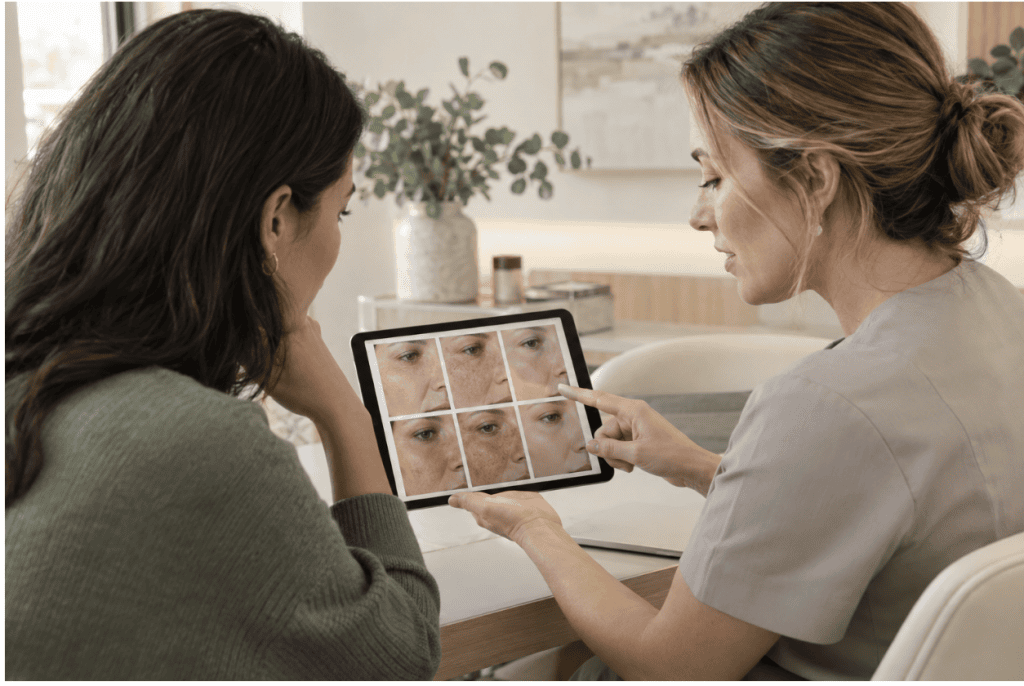
A practitioner may ask:
- When the pigmentation first appeared
- Whether it followed acne, irritation or an injury
- Whether it changes with the seasons
- Whether pregnancy or hormonal medication may be relevant
- Which skincare products or procedures have been used
- Whether there is a family history of similar pigmentation
- How the skin responds to sunlight
A dermatoscope, which is a specialised handheld magnifying device, may be used to examine structures within the skin more closely. Skin imaging or standardised photographs may also help establish a baseline and monitor changes.
Further medical assessment may be recommended when pigmentation cannot be confidently identified or has features that require investigation.
At MAEC, skin analysis forms part of the consultation process before a personalised plan is developed and reviewed with a cosmetic doctor.
When should pigmentation be medically checked?
Melasma and common forms of hyperpigmentation are generally flat and do not usually cause physical symptoms.
Seek medical assessment if a pigmented area:
- Is new and changing
- Develops an irregular shape or multiple colours
- Becomes raised, itchy, painful or inflamed
- Bleeds, crusts or does not heal
- Changes noticeably over a short period
- Looks different from your other spots
- Cannot be confidently identified
These features do not automatically indicate a serious condition, but they should not be self-diagnosed as melasma, freckles or sunspots.
Does sun protection matter for every type of pigmentation?
Sun exposure can darken melasma, post-inflammatory marks and freckles, while long-term exposure contributes to the development of sunspots.
In Australia, daily sun protection is therefore an important part of managing facial pigmentation as well as protecting overall skin health.
Cancer Council Australia recommends SPF 50 or SPF 50+, broad-spectrum and water-resistant sunscreen whenever UV levels reach 3 or above. Sunscreen should be combined with protective clothing, shade, sunglasses and a broad-brimmed hat.
For melasma, Australian dermatology guidance also notes that an iron oxide-containing sunscreen may be helpful because visible light can contribute to pigment stimulation.
Sun protection will not remove existing pigmentation, but it may help reduce further darkening and support the stability of any broader management plan.
Frequently asked questions
Is melasma more serious than hyperpigmentation?
Melasma is one form of hyperpigmentation rather than a more serious version of it. It is usually benign, but it can be persistent and may have a considerable emotional impact because it commonly affects the face.
Are acne marks considered melasma?
Usually not. Flat dark marks left after acne are more commonly post-inflammatory hyperpigmentation. However, a person can have acne-related pigmentation and melasma at the same time.
Can sunspots turn into melasma?
Sunspots do not usually transform into melasma. They are different pigment concerns, although sun exposure can contribute to both and they may appear together.
Why did my pigmentation become worse after treatment?
Inflammation caused by an unsuitable or overly aggressive product or procedure can stimulate pigment production. Melasma may also relapse after certain procedures or renewed sun exposure. An assessment is needed to determine what has occurred.
Can skincare alone tell me which type of pigmentation I have?
No. A product’s marketing category does not diagnose the cause of pigmentation. Products described as brightening or targeting dark spots may not be suitable for every skin type or pigment concern.
Will all facial pigmentation respond to the same treatment?
No. Response depends on the cause, pigment depth, skin type and individual sensitivity. Melasma, sunspots and post-inflammatory pigmentation may require different strategies, even when they appear similar.
Understanding the pigment before treating it
Melasma, sunspots and post-inflammatory pigmentation can all create areas of darker facial skin, but they do not necessarily develop or behave in the same way.
Recognising the pattern can provide useful clues. However, an accurate assessment considers more than colour alone. It also looks at where the pigment sits, when it appeared, what may have triggered it and how the skin has responded to previous treatment.
MAEC provides consultation-led skin assessment in Bulleen, Melbourne, with an emphasis on understanding the skin before recommending treatment. Explore MAEC’s skin rejuvenation approach or book a consultation to discuss your pigmentation concerns with the clinical team.
Leave a Reply