
Men’s Skin and Aging: What Changes and How to Treat It
For many men, skincare isn’t a priority until the first signs of ageing begin to appear. Fine lines around the eyes, deeper forehead wrinkles, rougher skin texture and uneven pigmentation often become more noticeable over time. While these changes are a natural part of ageing, understanding why they occur can help you make informed decisions about maintaining healthy skin for years to come.
At MAEC, a forthcoming doctor-led Melbourne Aesthetic Clinic in Bulleen, we believe that healthy ageing starts with education and personalised care. Rather than chasing quick fixes, our consultation-first approach focuses on understanding your skin, identifying the factors contributing to visible aging, and developing a personalised treatment plan that supports long-term skin health.
How Does Men's Skin Age?
Although men’s skin is generally thicker and contains more collagen than women’s during younger adulthood, it still undergoes gradual changes with age. These changes occur because of natural biological processes as well as environmental and lifestyle factors.
Collagen and Elastin Decline
Collagen provides strength and structure to the skin, while elastin allows it to stretch and return to its original shape. As we age, the body’s production of both proteins gradually slows.
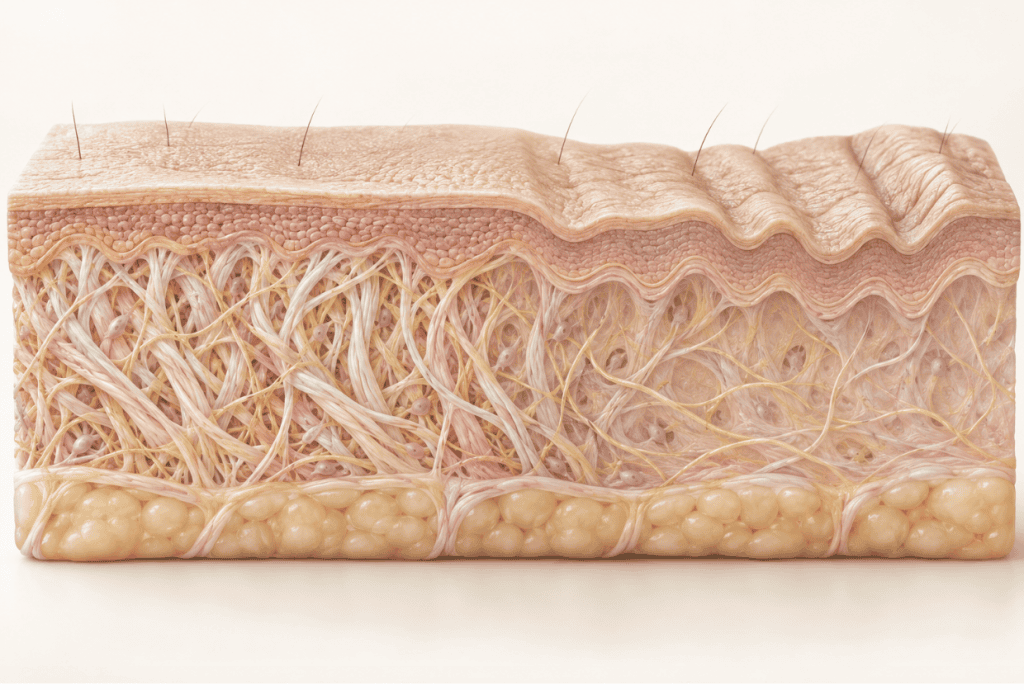
This can lead to:
- Fine lines and wrinkles
- Reduced skin firmness
- Thinner-looking skin
- Loss of facial definition
These changes occur naturally but may become more noticeable depending on genetics and lifestyle.
Slower Skin Renewal
Healthy skin continually sheds old cells and replaces them with new ones. As this renewal process slows with age, skin can appear duller, rougher and less even in tone.
Some men may also notice:
- Larger-looking pores
- Dry or dehydrated skin
- Reduced skin radiance
- Slower recovery from irritation
The Effects of Sun Exposure
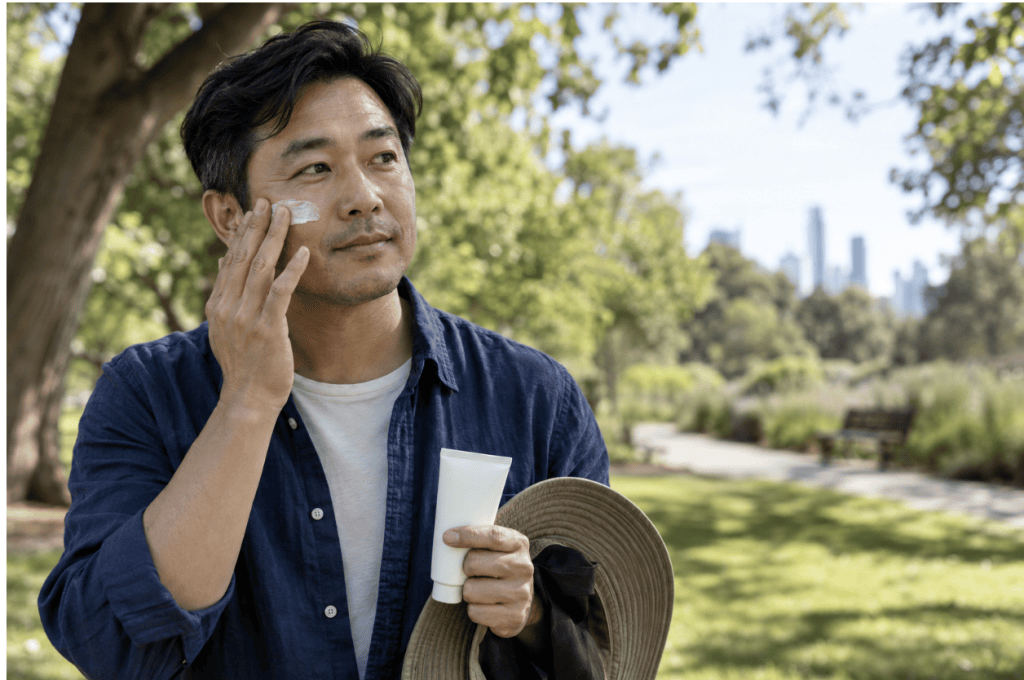
Australia has one of the highest levels of ultraviolet (UV) radiation in the world, making sun exposure one of the most significant contributors to premature skin ageing.
Over time, UV exposure breaks down collagen and elastin fibres within the skin, contributing to:
- Wrinkles
- Pigmentation
- Uneven skin tone
- Rough skin texture
- Reduced skin elasticity
Daily sun protection remains one of the most effective ways to support long-term skin health.
Common Signs of Ageing Skin in Men
Every person’s skin ages differently, but some of the most common concerns include:
- Fine lines around the eyes
- Forehead wrinkles
- Crow’s feet
- Pigmentation or sunspots
- Uneven skin tone
- Rough skin texture
- Enlarged pores
- Dull complexion
- Loss of skin firmness
These changes often develop gradually, making them easy to overlook until they become more noticeable.
What Causes Premature Skin Ageing?
While ageing itself cannot be prevented, several factors can accelerate visible skin changes.
Sun Exposure
Long-term UV exposure is widely recognised as the leading cause of premature skin ageing. It contributes to collagen breakdown and increases the likelihood of pigmentation and uneven skin texture.
Smoking
Smoking reduces blood flow to the skin and damages collagen and elastin. Over time, this may contribute to deeper wrinkles and slower skin repair.
Lifestyle Habits
Other factors that influence skin health include:
- Poor sleep
- Chronic stress
- Excessive alcohol consumption
- Inadequate hydration
- Poor nutrition
Healthy lifestyle choices support overall wellbeing and may also help maintain healthier skin.
Evidence-Based Ways to Support Healthier Ageing Skin
There is no single solution for aging skin. Instead, maintaining skin quality often involves a combination of good skincare habits, healthy lifestyle choices and professional guidance where appropriate.
Build a Consistent Skincare Routine
A simple daily routine can help protect and support ageing skin.
Key steps include:
- Gentle cleansing
- Daily moisturising
- Broad-spectrum SPF 50+ sunscreen
- Skincare products recommended for your skin type
Consistency is often more important than using numerous products.
Protect Your Skin from UV Damage
Sun protection should be part of your everyday routine, regardless of the season.
Wearing sunscreen daily, seeking shade where possible and using protective clothing can help minimise further UV-related skin damage.
Consider Professional Skin Rejuvenation
For some individuals, professional skin rejuvenation treatments may help address concerns such as uneven skin texture, pigmentation or fine lines.
Following a comprehensive skin consultation, a doctor may discuss treatment options that support:
- Skin quality
- Skin texture
- Facial rejuvenation
- Long-term collagen support
The most appropriate treatment varies from person to person. An individual assessment is essential to determine suitability and develop realistic expectations.
Why a Personalised Skin Assessment Matters

No two people experience skin ageing in exactly the same way.
Factors such as genetics, occupation, sun exposure, medical history and skincare habits all influence how the skin changes over time.
A comprehensive skin consultation allows your clinician to assess:
- Current skin health
- Areas of sun damage
- Skin texture and hydration
- Individual concerns
- Long-term treatment priorities
Rather than focusing on isolated concerns, this assessment helps create a personalised treatment plan tailored to your skin and goals.
The MAEC Approach
At MAEC, we believe aesthetic medicine should begin with understanding—not treatment.
As a doctor-led aesthetic clinic opening soon in Bulleen, we provide consultation-first care for patients across Melbourne and Eastern Melbourne. Every consultation includes a thorough assessment of your skin, an opportunity to discuss your concerns and personalised recommendations based on clinical assessment and evidence-based practice.
Our goal is not to change who you are, but to help you better understand your skin and make informed decisions that support its long-term health.
Frequently Asked Questions
At what age should men start thinking about skin ageing?
Healthy skincare habits, particularly daily sun protection, are beneficial at any age. Many men begin seeking professional advice when they first notice changes in skin texture, pigmentation or fine lines.
Is men's skin different from women's?
Yes. Men's skin is generally thicker, produces more oil and contains more collagen during younger adulthood. However, it is still affected by ageing, UV exposure and lifestyle factors.
Can collagen loss be prevented?
Collagen naturally declines with age and cannot be completely prevented. However, protecting the skin from UV damage, maintaining healthy lifestyle habits and seeking appropriate professional advice may help support overall skin quality.
Are skin rejuvenation treatments suitable for everyone?
Not always. The most appropriate approach depends on your skin condition, medical history and treatment goals. A personalised consultation helps determine whether treatment is suitable for your individual needs.
Conclusion
Ageing is a natural process, but understanding how men’s skin changes over time can help you take proactive steps to maintain healthy skin. Daily sun protection, consistent skincare and healthy lifestyle habits all contribute to better long-term skin health, while personalised professional advice can help address concerns as they arise.
At MAEC, our doctor-led, consultation-first approach focuses on education, evidence-based care and personalised treatment planning. If you’re considering ways to support your skin as you age, a comprehensive consultation can provide clarity, realistic expectations and a tailored plan based on your individual needs.
A Thought to Consider
Healthy ageing isn’t about trying to look younger—it’s about looking after your skin so it continues to look and function at its best. Small, consistent steps today can have a meaningful impact on your skin health in the years ahead.
Sources
- Australasian College of Dermatologists. Skin Ageing.
https://www.dermcoll.edu.au/atoz/skin-ageing/ - Cancer Council Australia. Be SunSmart.
https://www.cancer.org.au/cancer-information/causes-and-prevention/sun-safety - Healthdirect Australia. Sun Safety.
https://www.healthdirect.gov.au/sun-safety - DermNet NZ. Ageing Skin.
https://dermnetnz.org/topics/ageing-skin - American Academy of Dermatology. How to Prevent Premature Skin Ageing.
https://www.aad.org/public/everyday-care/skin-care-secrets/anti-aging/prevent-premature-aging
Leave a Reply