


Top 3 Treatments for Uneven Skin Tone in Melbourne
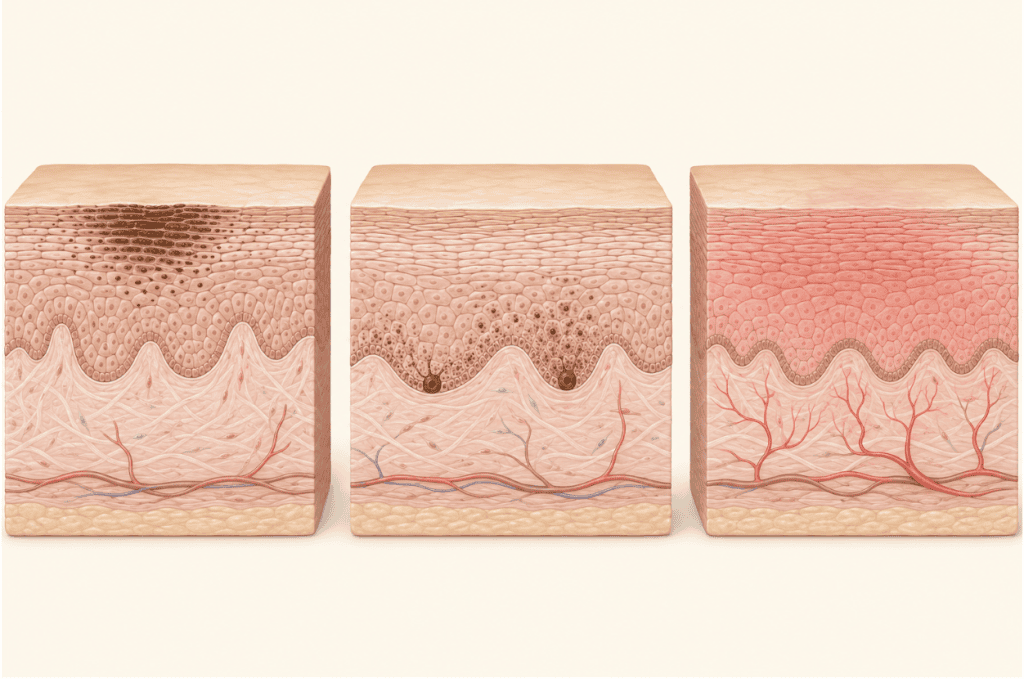
Uneven skin tone can appear as sun spots, freckles, brown patches, lingering marks after acne or areas of persistent redness. While these concerns may look similar at first, they can develop for very different reasons.
The most appropriate treatments for uneven skin tone in Melbourne therefore depend on what is causing the colour change, how deeply it sits within the skin and how your skin responds to heat or inflammation. A treatment that may suit sun-related pigmentation will not necessarily be appropriate for melasma or post-inflammatory hyperpigmentation.
This article explores three treatment pathways available through MAEC and explains why a personalised skin assessment should always come first.
What Does Uneven Skin Tone Mean?
“Uneven skin tone” is a broad description rather than a diagnosis. It may involve brown pigmentation, redness, textural irregularities or a combination of these concerns.
Common contributors include:
- Cumulative ultraviolet exposure
- Freckles and solar lentigines, commonly called sun spots
- Melasma
- Post-inflammatory hyperpigmentation after acne, eczema or irritation
- Hormonal changes
- Visible superficial blood vessels
- Persistent facial redness
- Skin texture changes that affect how light reflects from the face
- Previous treatments that have caused excessive inflammation
Melanin is the pigment that gives skin its colour. When pigment-producing cells called melanocytes become overactive, certain areas may appear darker than the surrounding skin.
However, not all uneven colour is caused by melanin. Redness may come from inflammation or visible blood vessels, while rough texture can create shadows that make the complexion appear less uniform.
According to the Australasian College of Dermatologists, inflammation or trauma from conditions such as acne and eczema—or from the incorrect use of procedures—can stimulate pigment production. This is known as post-inflammatory hyperpigmentation and is more common in people with pigmented skin.
Why a Skin Assessment Matters Before Treatment
Choosing a treatment based solely on how the skin looks in the mirror can lead to disappointing results or unwanted irritation. Similar-looking concerns may need very different treatment strategies.
A personalised skin consultation may consider:
- Whether the colour change is brown, red or mixed
- The likely type and depth of pigmentation
- Your natural skin tone
- Recent tanning and sun exposure
- Previous acne or inflammatory skin conditions
- Your tendency to pigment after irritation
- Hormonal and medical factors
- Current skin care and medications
- Previous procedures and how your skin responded
- Your preferred recovery period
Melasma needs particular care. The Australasian College of Dermatologists explains that melasma is influenced by factors including genetics, ultraviolet exposure and hormonal changes. It also notes that laser and light-based treatments are generally reserved for treatment-resistant cases because results can be unpredictable and treatment may worsen the condition.
Before cosmetic treatment, any new, changing, bleeding or unusually shaped spot should be medically assessed. Healthdirect Australia recommends speaking to a doctor about concerning spots or changes in the skin.
Top 3 Treatments for Uneven Skin Tone in Melbourne
There is no single “best” treatment for every person. The following options may be considered at MAEC after an individual assessment identifies the likely cause of the uneven tone.
1. IPL and Other Light-Based Treatments
Intense pulsed light, or IPL, uses multiple wavelengths of light rather than the single wavelength used by a traditional laser. Selected wavelengths can be used to target certain colours within the skin, including melanin in some brown spots and haemoglobin within visible blood vessels.
What may IPL help address?
Depending on individual suitability, IPL may be considered for:
- Selected sun spots
- Freckles
- Mottled pigmentation associated with sun exposure
- Certain forms of facial redness
- Visible superficial blood vessels
- A combination of selected brown and red concerns
IPL is not suitable for every skin type or every pigmentation condition. The device, filter, energy level and treatment settings must be selected carefully.
People with recently tanned skin or a history of post-inflammatory hyperpigmentation may face a higher risk of unwanted colour changes. IPL should also not be presented as a routine first choice for melasma.
What should you expect?
During treatment, patients may feel warmth or a brief snapping sensation. Temporary redness, swelling and sensitivity can occur afterwards.
Pigmented areas may initially become darker before gradually flaking or fading. Recovery and visible changes vary according to the condition treated, treatment intensity and individual skin response.
Sun avoidance and suitable skin care are important during recovery because recently treated skin may be more sensitive.
2. Fractional and CO₂ Laser Resurfacing
Fractional and CO₂ laser treatments are forms of skin resurfacing. Rather than only targeting the colour within an isolated spot, resurfacing creates controlled treatment zones that encourage skin renewal.
Fractional treatment affects small columns of skin while leaving surrounding tissue untreated. This allows the skin to heal between the treated zones. CO₂ laser is an ablative technology, meaning it can remove controlled portions of the skin’s surface at a carefully selected depth.
When may resurfacing be considered?
Fractional or CO₂ laser resurfacing may be considered when uneven tone occurs alongside:
- Rough or irregular skin texture
- Selected superficial pigmentation
- Signs of cumulative sun exposure
- Fine lines
- Enlarged pores
- Acne scarring
- Reduced overall skin quality
Improving skin texture may help light reflect more evenly from the face, creating a more balanced-looking complexion. However, resurfacing is not automatically appropriate for every pigment concern.
Recovery and limitations
Recovery depends heavily on the type of device, treatment depth and intensity. Possible short-term effects include:
- Redness
- Swelling
- Warmth or sensitivity
- Peeling
- Temporary crusting
- A period of increased sun sensitivity
More intensive resurfacing generally involves a longer recovery period. It may also carry a risk of prolonged redness, infection, scarring or post-inflammatory pigmentation.
This risk is especially relevant for people who pigment easily. The Australasian College of Dermatologists cautions that lasers and chemical peels can cause or worsen post-inflammatory hyperpigmentation when used incorrectly.
More intensive treatment is not necessarily better. The appropriate approach is the one matched to the concern, skin type and acceptable recovery period.
3. Radiofrequency Microneedling
Radiofrequency microneedling combines fine needles with controlled radiofrequency energy delivered beneath the skin’s surface. It is primarily a skin-remodelling treatment rather than a treatment that directly removes brown pigment.
For uneven tone, its potential role depends on what is making the complexion appear irregular.
When may RF microneedling be considered?
RF microneedling may be discussed when uneven tone appears alongside:
- Acne-related textural changes
- Enlarged pores
- Mild textural scarring
- Uneven skin texture
- General skin quality concerns
The needles create controlled microchannels while radiofrequency energy produces heat at selected depths. This stimulates a repair response and supports collagen remodelling over time.
When texture or acne scarring casts small shadows across the skin, improving the surface may help the complexion appear more balanced. However, RF microneedling is not a universal treatment for melasma, freckles or isolated sun spots.
What should you expect?
Temporary redness, swelling, tenderness and pinpoint marks may occur. Recovery varies according to the treatment depth, energy settings and individual skin response.
Potential complications include infection, prolonged inflammation and post-inflammatory pigmentation. Careful treatment planning and aftercare are particularly important for people with more reactive skin or a history of pigmentation following inflammation.
How Do the Three Treatments Compare?
Treatment | May be considered for | General recovery considerations |
IPL or light-based treatment | Selected sun spots, freckles, superficial redness and visible blood vessels | Temporary redness, swelling, warmth or darkening of pigment |
Fractional or CO₂ resurfacing | Uneven tone combined with texture, sun damage, fine lines or scarring | Redness, peeling and a longer recovery period depending on intensity |
RF microneedling | Texture, enlarged pores and acne scarring contributing to an uneven appearance | Redness, swelling, tenderness and pinpoint marks |
These are general comparisons. Treatment names alone cannot determine suitability or recovery because different devices, depths and settings can produce very different effects.
Can Skin Care Help Improve Uneven Tone?
In-clinic treatments are only one part of managing uneven skin tone. A suitable home routine can reduce avoidable irritation, support the skin barrier and help protect against further ultraviolet damage.
A personalised routine may include:
- A gentle cleanser
- Regular moisturising
- Avoiding products that repeatedly sting or inflame the skin
- Carefully selected pigment-supporting ingredients
- Daily broad-spectrum sunscreen
- Hats, protective clothing and shade
Healthdirect Australia explains that ultraviolet radiation can damage the skin and recommends sunscreen as part of sun protection. Australian guidance generally advises using a high-protection, broad-spectrum and water-resistant sunscreen.
For melasma, the Australasian College of Dermatologists recommends SPF50 or SPF50+ broad-spectrum, water-resistant sunscreen and notes that an iron oxide-containing formula may be preferable.
Sunscreen cannot remove existing pigmentation, but it can help limit additional UV-related changes and support a longer-term skin health plan.
The MAEC Approach to Uneven Skin Tone
At MAEC, treatment planning begins with understanding why the skin looks uneven rather than immediately selecting a device.
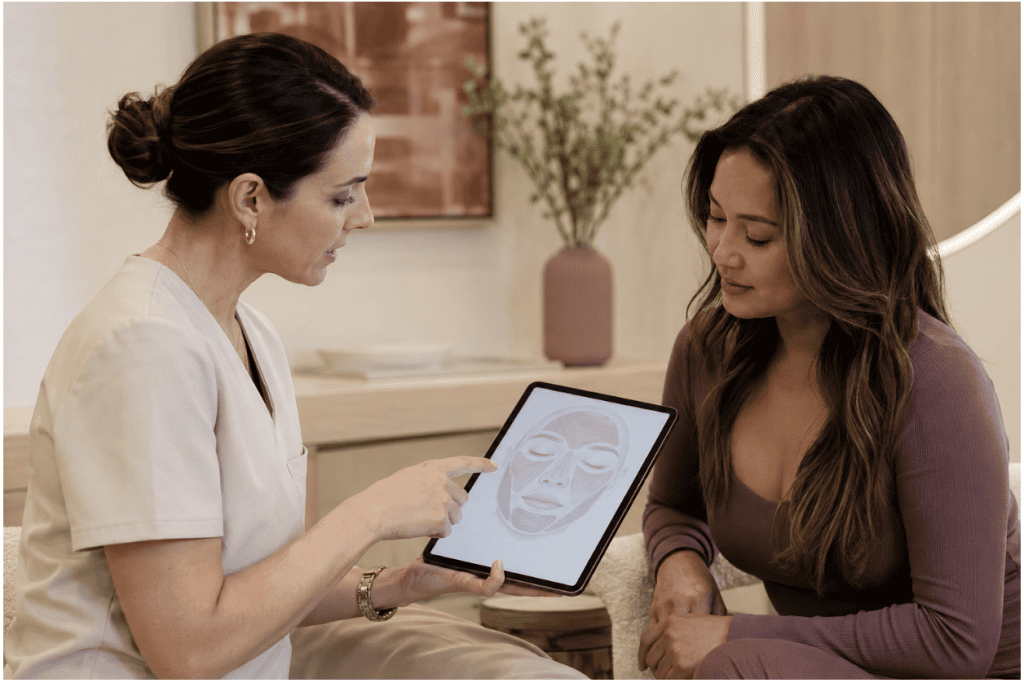
During a personalised consultation at the doctor-led aesthetic clinic in Bulleen, the team may review your skin history, current routine, lifestyle, previous treatment responses and individual risk factors. Skin analysis may provide further information about pigmentation, redness and texture, although it does not replace clinical judgement or a medical skin examination where required.
A personalised treatment plan may involve:
- One carefully selected procedure
- A staged combination of treatments
- Skin preparation before an energy-based treatment
- A supportive home-care routine
- Postponing treatment until inflammation or barrier damage has settled
- Referral for medical assessment when a spot requires further investigation
This consultation-first approach supports realistic expectations and thoughtful treatment planning for patients seeking skin rejuvenation in Melbourne East.
Conclusion
The three treatment pathways commonly considered for uneven skin tone in Melbourne are IPL or light-based treatment, fractional or CO₂ laser resurfacing and RF microneedling.
Each addresses a different combination of pigment, redness, texture and skin damage. IPL may be considered for selected pigmented or vascular concerns, resurfacing may help when tone and texture are both involved, and RF microneedling may be relevant when pores or acne-related texture contribute to an uneven appearance.
The best starting point is an accurate assessment—not necessarily the most intensive treatment. A personalised consultation with MAEC can help determine what may be causing the changes and which options, if any, are appropriate for your skin.
A Thought to Consider
Uneven skin tone describes what you can see, but it does not explain why it is happening. Before asking which treatment is strongest, consider asking: What is causing the change in my skin, and what is the safest way to manage it over time?
References
- Australasian College of Dermatologists – Melasma
- Australasian College of Dermatologists – Post-inflammatory Hyperpigmentation
- Healthdirect Australia – Sunscreen
- Healthdirect Australia – Should I Be Checked for Skin Cancer?
- Healthdirect Australia – Skin Cancer and Melanoma
- Healthdirect Australia – Sunburn and Sun Protection
- Cancer Council Australia – Sun Safety
Leave a Reply