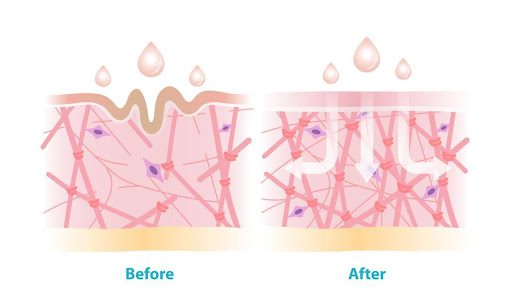
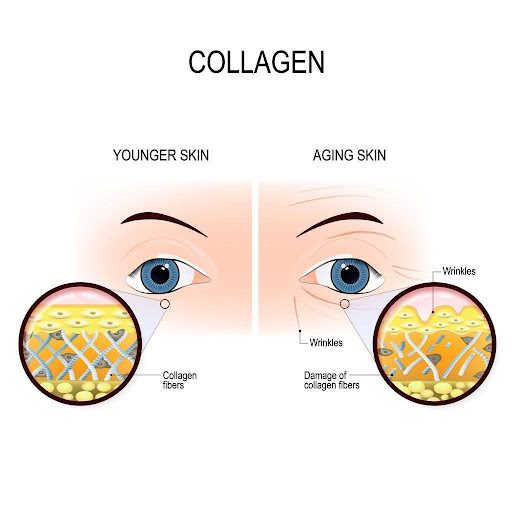
Collagen is the most abundant protein in the human body and plays a major role in maintaining skin structure.
In youthful skin, collagen fibres are:
- Dense
- Organised
- Flexible
- Strong
This creates skin that appears smoother, firmer, and more resilient.
As collagen declines, the skin gradually loses structural support, resulting in visible ageing changes over time.
Research from Harvard Medical School explains that both intrinsic ageing (natural ageing) and extrinsic ageing (sun exposure, pollution, lifestyle factors) contribute significantly to collagen breakdown.
Why Collagen Declines Over Time
Several factors accelerate collagen loss beyond normal ageing.
Natural Ageing
Collagen production slows gradually as part of the biological ageing process.
UV Exposure
Sun exposure is one of the largest contributors to premature collagen breakdown. The American Academy of Dermatology states that UV radiation damages collagen fibres and accelerates visible ageing significantly.
Lifestyle Factors
Stress, smoking, poor sleep, and nutrition may also impact collagen quality and skin repair.
Hormonal Changes
Hormonal fluctuations — particularly during menopause — may contribute to faster collagen decline and skin thinning.
These combined factors influence how quickly the skin begins to change over time.
How Collagen Loss Appears on the Face
Collagen loss affects more than wrinkles alone.
Common signs include:
- Skin laxity around the jawline
- Hollowing beneath the eyes
- Reduced cheek support
- Fine lines and creasing
- Rough or uneven texture
Because collagen supports the skin structurally, its decline often affects multiple areas of the face simultaneously.
This is why some people may notice both skin texture changes and facial volume changes at the same time.
Treatments That Support Collagen Production
Modern aesthetic treatments increasingly focus on stimulating collagen rather than simply masking ageing changes.
These treatments may include:
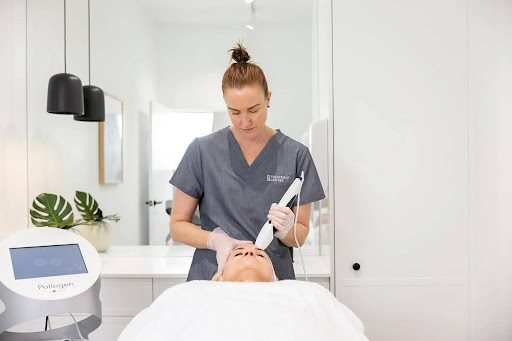
- Radiofrequency therapies
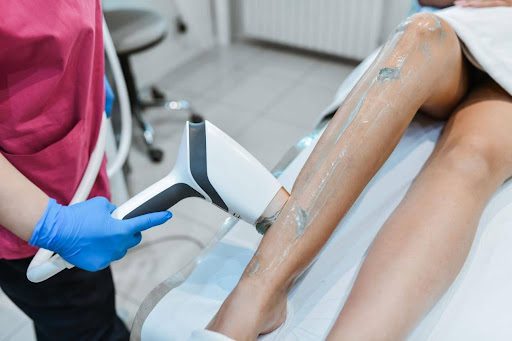
- Laser resurfacing
- Microneedling
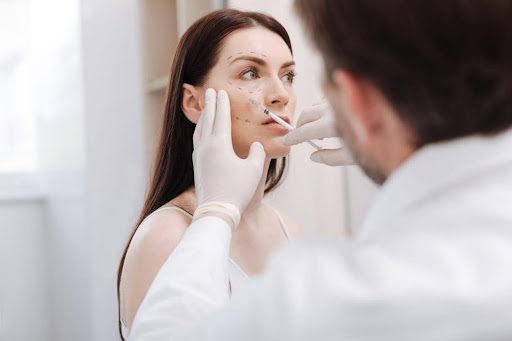
- Biostimulatory injectables
- Combination rejuvenation treatments
A review published in the Journal of Clinical and Aesthetic Dermatology highlights that collagen-stimulating treatments may improve both skin quality and long-term structural support.
The most suitable approach depends on:
- Degree of collagen loss
- Skin condition
- Ageing patterns
- Recovery preferences
- Individual treatment goals
Why Prevention Matters
One of the biggest misconceptions is that collagen-focused treatments are only for mature skin.
In reality, preventative approaches may help maintain collagen levels before significant decline occurs.
Globally, there has been a growing shift towards preventative aesthetic medicine — focusing on maintaining skin quality rather than reversing advanced changes later.
This approach often allows for:
- More gradual ageing management
- Subtle long-term improvements
- Reduced need for aggressive treatments later
The MAEC Approach
At MAEC, treatment recommendations are based on understanding how the skin is ageing rather than applying the same treatment to everyone.
This may involve:
- Supporting collagen production gradually
- Combining skin and structural treatments
- Maintaining natural facial balance
- Adjusting treatments as the skin evolves over time
The focus is not on chasing perfection, but on supporting healthier, stronger skin long term.
Conclusion
Collagen plays a central role in how the skin ages, heals, and maintains its structure.
As collagen naturally declines over time, understanding these changes becomes important in choosing treatments that are both effective and appropriate.
A personalised approach allows treatments to support the skin more naturally and sustainably over time.
A Thought to Consider
Sometimes ageing is less about adding something new — and more about preserving what the skin is gradually losing over time.
Learning how your skin changes with age can help guide treatment decisions more thoughtfully, realistically, and confidently.
Sources




Leave a Reply